



Tag Archive for: Gaming Regulation

Editorial illustration of tribal gaming sovereignty and legal history

Tribal Gaming Sovereignty: White Oak Casino Marks Bryan v. Itasca County

Tribal Gaming Sovereignty: White Oak Casino Marks Bryan v. Itasca County

tribal gaming sovereignty is the focus of this U.S. casino and gambling news briefing. It is based on White Oak Casino Marks 50 Years of Bryan v. Itasca County, published by Indian Gaming on September 25, 2026. This original summary keeps the source visible while adding context about what is known, what remains specific to the reported situation, and what should be checked next.

What the source report says

White Oak Casino Marks 50 Years of Bryan v. Itasca County Buyer’s Guide News Roundtable Features Openings Games Sports People Legal Outreach Search Friday, October 2, 2026 Indian Gaming Magazine Calendar of Events Associations Industry Overview About Us Contact Us Sign in Welcome! Log into your account your username your password Forgot your password? Get help Privacy Policy Password recovery Recover your password your email A password will be e-mailed to you. Indian Gaming Buyer’s Guide News G2E 2026 Wraps Up in Las Vegas Seminole Brighton Bay Named Best Place to Play Bingo The Legend of the Titanic to Debut at Mohegan Sun Paragon Casino Resort Earns Gold in Acadiana Choice Awards Agua Caliente Cultural Museum Presents Native Painting Exhibition Roundtable Chris Anoatubby, Governor – Chickasaw Nation Ray Halbritter, Representative – Oneida Indian Nation Earl "Trey" Howe III, Chairman – Ponca Tribe of Indians of… Austin Lowes, Cha

The source account describes a defined development rather than a complete picture of the national industry. The important distinctions are who made the statement, which jurisdiction or company is involved, what action has actually occurred, and what remains a plan, allegation, review, opinion, estimate, or future possibility. Those distinctions are especially important when a headline touches regulation, business performance, technology, or consumer risk.

Why tribal gaming sovereignty matters

Regulatory and legal stories turn on exact authority, jurisdiction, procedural posture, and the difference between an allegation, a proposal, an advocacy position, a review, and a final ruling.

For operators and suppliers, the immediate questions may involve compliance, customer experience, staffing, technology, capital plans, or timing. For regulators and public officials, the relevant evidence may include legal authority, public records, procedural status, and whether safeguards are working. Consumers should ask what product, property, contract, event, or proposal is involved and whether anything they can legally do today has changed.

U.S. gambling markets are not one uniform system. State laws, tribal compacts, licensing conditions, tax rules, advertising standards, court decisions, and responsible-gambling expectations can produce different outcomes in neighboring jurisdictions. A development in one state or company should not be presented as proof that every operator, bettor, casino, lottery, or prediction market faces the same conditions.

What to watch next

The next useful evidence may come from an official filing, regulator notice, court docket, company update, event organizer, audited result, or later report. That follow-up can clarify whether a proposal advances, a review produces a decision, an investment is deployed, a product is implemented, a market trend persists, or a legal claim changes. Until then, the most accurate approach is to describe the current development narrowly and keep confirmed facts separate from commentary and future possibilities.

Readers can compare the original account with Supreme Court of the United States and National Indian Gaming Commission. Those sources provide official or industry context, but they do not turn this article into legal, tax, investment, clinical, or wagering advice.

Related reading

Related coverage on this site includes Tribal Prediction Markets Dispute Gains Ground After Ninth Circuit Decision, French Gambler Wins $85 Million Through Unique Political Betting Strategy on Polymarket, Soboba Casino Resort in Focus: What the Latest Report Says. These links offer additional reading and are not endorsements of an operator, promotion, investment, event, or wager.

FAQ

Does this report change gambling rules everywhere in the United States?

No. Casino, lottery, sports-betting, tribal-gaming, and prediction-market rules depend on state law, tribal authority, licensing conditions, court decisions, and regulator guidance. A development involving one jurisdiction or company does not automatically apply nationwide.

What should readers verify before acting on this news?

Check the original source, publication date, named agency or organization, current terms, and whether the information is a proposal, estimate, allegation, preview, vote, order, review, or completed action. Use current official materials for legal, tax, financial, or consumer questions.

How can gambling stay recreational?

Set a budget and time limit before play, take breaks, and treat gambling as entertainment rather than income. If it stops feeling manageable, contact a qualified gambling-support service.

Responsible gambling: Gambling involves risk and is not a guaranteed way to make money. Only participate where legal, use funds you can afford to lose, set time and spending limits, avoid chasing losses, and seek qualified support if gambling affects your finances, relationships, or wellbeing. The National Council on Problem Gambling provides confidential information and support.

Original source: White Oak Casino Marks 50 Years of Bryan v. Itasca County from Indian Gaming. This is an original summary and context piece based on that report.
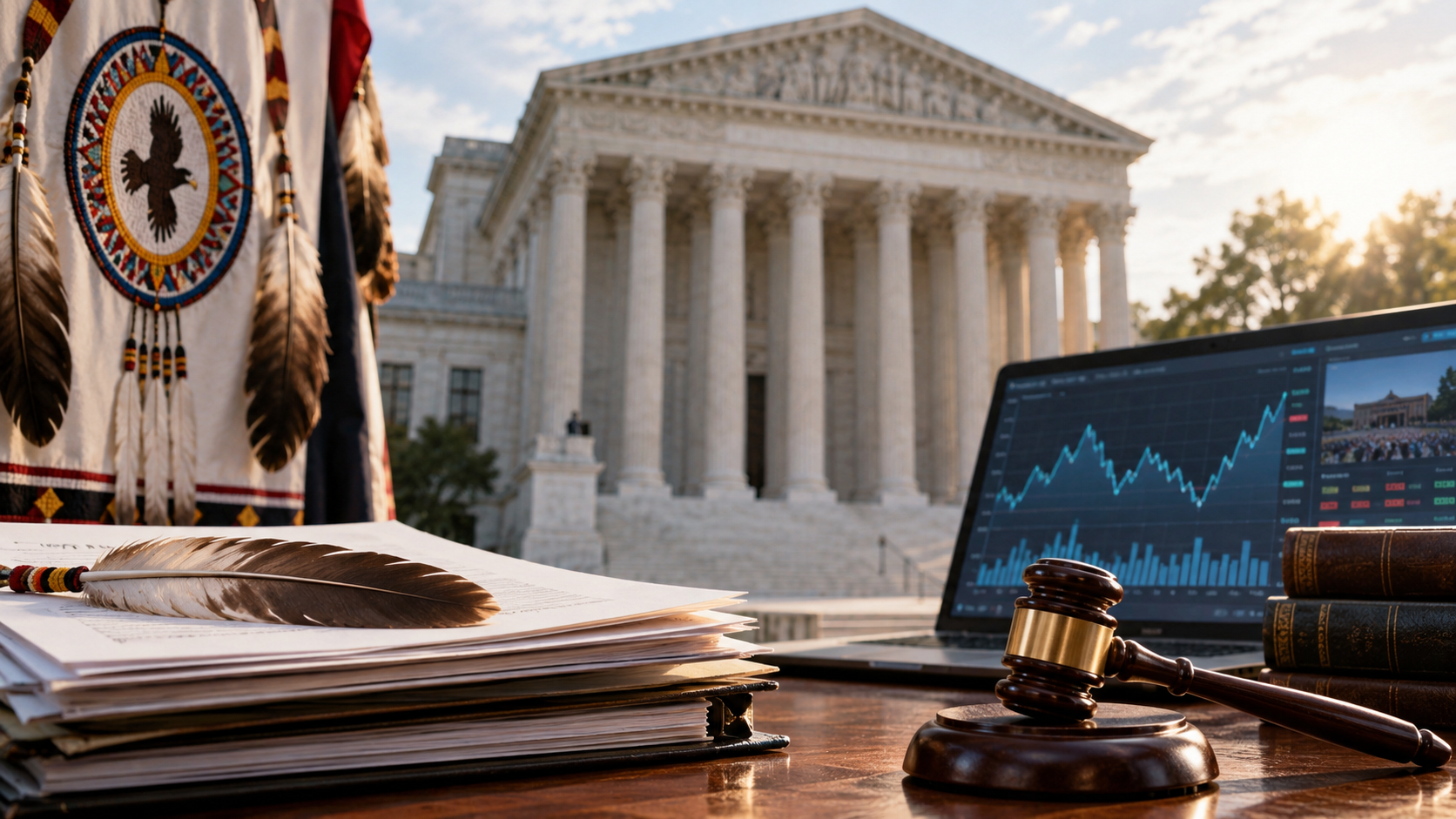
Editorial illustration of tribal prediction markets, a federal appeals court, and gaming policy documents

Tribal Prediction Markets Dispute Gains Ground After Ninth Circuit Decision

Tribal Prediction Markets Dispute Gains Ground After Ninth Circuit Decision

tribal prediction markets is the focus of this U.S. casino and gambling news briefing. It is based on IGA: Ninth Circuit Backs Tribes on Prediction Markets, published by Indian Gaming on September 25, 2026. This original summary keeps the source visible while adding context for readers who want to understand what is known, what remains specific to the reported situation, and what should be checked next.

What the source report says

IGA: Ninth Circuit Backs Tribes on Prediction Markets Buyer’s Guide News Roundtable Features Openings Games Sports People Legal Outreach Search Thursday, October 1, 2026 Indian Gaming Magazine Calendar of Events Associations Industry Overview About Us Contact Us Sign in Welcome! Log into your account your username your password Forgot your password? Get help Privacy Policy Password recovery Recover your password your email A password will be e-mailed to you. Indian Gaming Buyer’s Guide News The Legend of the Titanic to Debut at Mohegan Sun Paragon Casino Resort Earns Gold in Acadiana Choice Awards Agua Caliente Cultural Museum Presents Native Painting Exhibition Seneca Resorts & Casinos Unveils New Brand Identity Pechanga Named to AAA’s Top 10 Casino Resorts Roundtable Chris Anoatubby, Governor – Chickasaw Nation Ray Halbritter, Representative – Oneida Indian Nation Earl "Trey" Howe III, Chairman – Ponca Tribe of Indians of… Austin Lowes, Chairman – Sault Tribe of Chippewa Indians Buddy Rocha Jr., Chairman – Yavapai-Apache Nation Features IGA Report: Prediction Markets Blocked from Offering Sports Gambling on Indian… Prediction Markets or Predator Markets? The Potentially Powerful Voice of Tribal… Executive Q&A: Up Close With Mary Smith, President and CEO of Four Winds… Property Review: North Fork Mono Casino – Madera, CA Anniversary: From a Bingo Tent to a New Mexico Destination –… Openings Tulalip Resort Casino Completes Expansion, Renovation H

The source account describes a defined development rather than a complete picture of the national industry. The sequence matters. Readers should identify what was announced, who made the statement, which jurisdiction or company is involved, and what action has actually occurred. A report may describe a proposal, investigation, legal claim, investment, revenue result, technology arrangement, event plan, or court process without resolving every question that follows.

Why tribal prediction markets matters

Regulatory and legal stories turn on exact authority, jurisdiction, procedural posture, and the difference between an allegation, a proposal, an order, a review, and a final ruling.

For operators and suppliers, the immediate questions may involve compliance, customer experience, staffing, technology, capital plans, or timing. For regulators and public officials, the relevant evidence may include legal authority, disclosure, public records, procedural status, and whether safeguards are working. Consumers should ask what product, property, contract, event, or proposal is involved and whether anything they can legally do today has changed.

U.S. gambling markets are not one uniform system. State laws, tribal compacts, licensing conditions, tax rules, advertising standards, court decisions, and responsible-gambling expectations can produce different outcomes in neighboring jurisdictions. A development in one state or company should not be presented as proof that every operator, bettor, casino, lottery, or prediction market faces the same conditions.

What to watch next

The next useful evidence may come from an official filing, regulator notice, court docket, company update, event organizer, audited result, or later report. That follow-up can clarify whether a proposal advances, a review produces a decision, an investment is deployed, a contract is implemented, a revenue trend persists, or a legal claim changes. Until then, the most accurate approach is to describe the current development narrowly and keep confirmed facts separate from allegations, estimates, forecasts, commentary, and future possibilities.

Readers can compare the original account with U.S. Court of Appeals for the Ninth Circuit and National Indian Gaming Commission. Those sources provide official or industry context, but they do not turn this article into legal, tax, investment, clinical, or wagering advice.

Related reading

Related coverage on this site includes French Gambler Wins $85 Million Through Unique Political Betting Strategy on Polymarket, Soboba Casino Resort in Focus: What the Latest Report Says, Florida Demands Google Meta TikTok in Focus: What the Latest Report Says. These links offer additional reading and are not endorsements of an operator, promotion, investment, event, or wager.

FAQ

Does this report change gambling rules everywhere in the United States?

No. Casino, lottery, sports-betting, and prediction-market rules depend on state law, tribal authority, licensing conditions, court decisions, and regulator guidance. A development involving one jurisdiction or company does not automatically apply nationwide.

What should readers verify before acting on this news?

Check the original source, publication date, named agency or organization, current terms, and whether the information is a proposal, estimate, allegation, preview, vote, order, or completed action. Use current official materials for legal, tax, or financial questions.

How can gambling stay recreational?

Set a budget and time limit before play, take breaks, and treat gambling as entertainment rather than income. If it stops feeling manageable, contact a qualified gambling-support service.

Responsible gambling: Gambling involves risk and is not a guaranteed way to make money. Only participate where legal, use funds you can afford to lose, set time and spending limits, avoid chasing losses, and seek qualified support if gambling affects your finances, relationships, or wellbeing. The National Council on Problem Gambling provides confidential information and support.

Original source: IGA: Ninth Circuit Backs Tribes on Prediction Markets from Indian Gaming. This is an original summary and context piece based on that report.